
Launch of the “SGLive” Project: Digitizing Distribution Networks for a Resilient Energy System
Kassel, January 22, 2026 - The implementation of smart grids reduces grid expansion. However, large amounts of data are generated that need to be recorded, processed, securely forwarded and used. This new task in the low-voltage grid is where the SGLive project comes in. The Smart Grid LAB Live will focus on the digitalization of distribution grids for three years. The new project is co-financed by the state of Hesse with around one million euros from EU funds and combines the expertise of three partners: Darmstadt University of Applied Sciences (project management), Ingenieurbüro Pfeffer and the House of Energy.
Building on the predecessor project "Smart Grid LAB Hessen", the existing laboratory at Darmstadt University of Applied Sciences is being expanded to include active and secure control methods and resilient operating concepts. A particular focus is on the development of a cyber security architecture by the Department of Computer Science at Darmstadt University of Applied Sciences. This is based on innovative methods for attack detection and long-term security, such as cryptoagility. The concepts and methods are then implemented and evaluated in the laboratory.
Based on this, Ingenieurbüro Pfeffer is developing a business model for the holistic digitalization of local grid stations to enable the visualization and control of the distribution grid. A project advisory board with representatives from distribution grid operators, the Federal Network Agency, VDE, BDEW and companies from the fields of digitalization and IT security, which the House of Energy is setting up and supervising, will ensure practical relevance and subsequent feasibility.
The aim of the project is to develop a comprehensive concept for transforming the passive low-voltage grid into an actively controllable and resilient smart grid. Both operational management and smart metering are part of the investigations.
The project pursues four objectives:
- New approaches to the resilient, optimized, data-driven operation of electricity grids with the integration of renewable energies and sector coupling
- Cyber security solutions for a resilient distribution grid with the integration of measurement and metering
- Implementation, integration and evaluation in the laboratory under realistic operating conditions
- Derivation of business models
In close cooperation with the engineering firm Pfeffer, the scientists from the Department of Electrical Engineering and Information Technology identify the retrofitting requirements for the laboratory. The aim is not only to implement a concept that regulates bottlenecks. The university is also working out how bottlenecks can be avoided by actively regulating them in advance. Flexsumers are therefore not restricted in their comfort.
"The local grid station is therefore being upgraded to become an "outpost of the control room". It will independently aggregate and evaluate the data generated and make recommendations to the control room. This reduces communication to the essentials and relieves the control room as much as possible," confirms Prof. Dr. Ing. Jeromin from the Department of Electrical Engineering and Information Technology at Darmstadt University of Applied Sciences. The EIT department is also responsible for the implementation, evaluation and reliability analysis of the developed concepts.
The Department of Computer Science is examining and identifying the need for retrofitting from a cyber security perspective. Questions of authentication and authorization are answered and security concepts are implemented that can be upgraded for future standards. The computer scientists develop cyber security solutions for a resilient distribution network and use this to design a comprehensive security architecture that is implemented and evaluated.
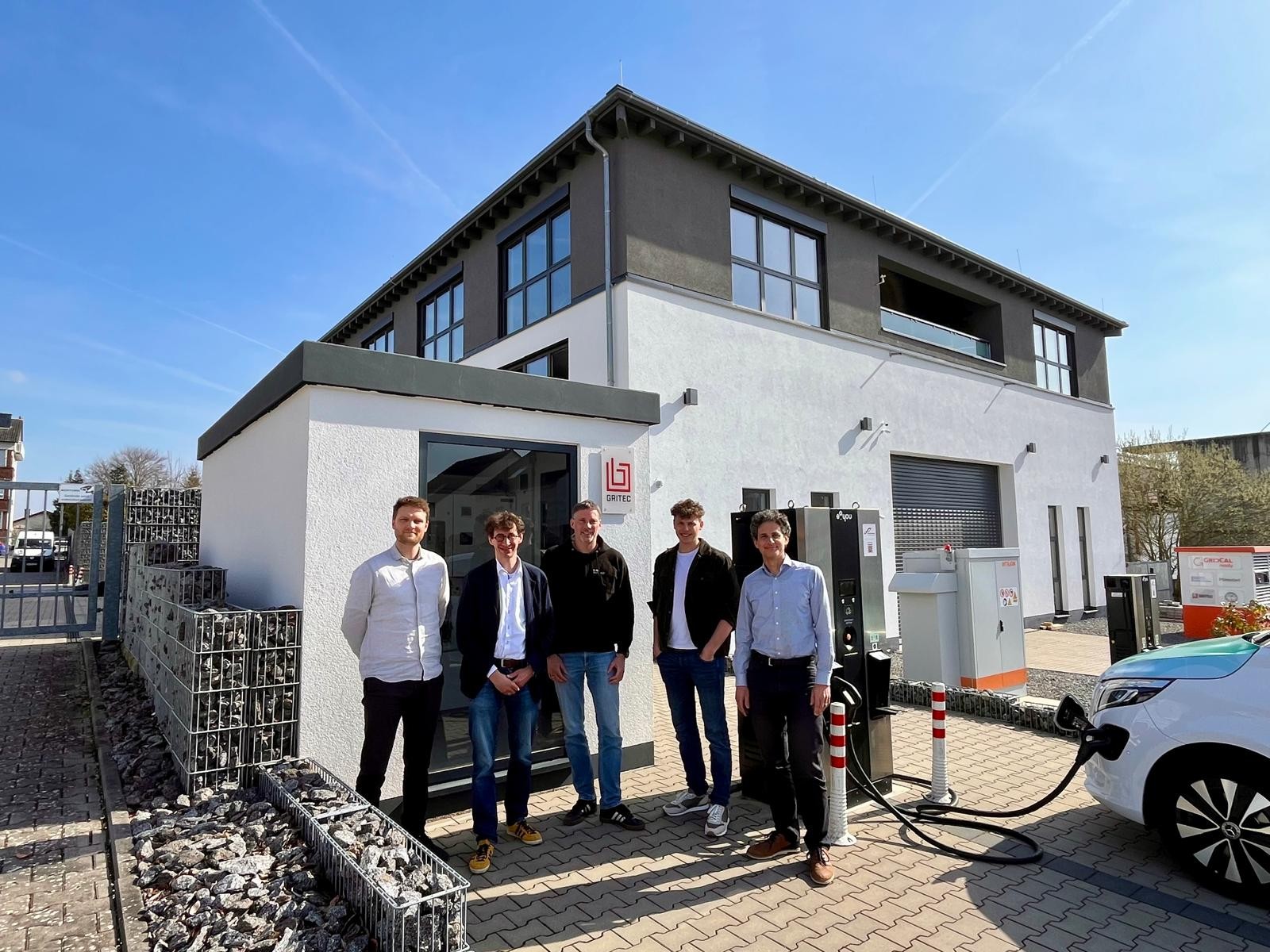
Ingenieurbüro Pfeffer is retrofitting the existing infrastructure of the Smart Grid LAB in line with the project requirements on site. This results in the technical basis for the required data acquisition, visualization and evaluation in order to create added value for the distribution grid operators. Outside of the project volume, Ingenieurbüro Pfeffer provides its premises and infrastructure. The infrastructure includes its own local grid station, PV system, battery storage and e-charging stations.
Sophia Pfeffer emphasizes the opportunities and added value of the project: "For us, the SGLive project is a consistent further development of our previous research and development work. The collaboration with all the players in the project is equally exciting and motivating. We will gain valuable new insights and create additional added value from the data collected. For our customers, this means that we are working together at the cutting edge and understand the rapidly changing requirements in terms of functionality, compliance with standards and legislation as well as operational safety."
As a multiplier, the House of Energy anchors the project and the results at a professional and public level. It initiates a project advisory board in which various experts discuss the project's findings. The House of Energy also manages transferability activities such as publications and events. Managing Director of the House of Energy Prof. Dr. Peter Birkner adds: "It's great to see how the Smart Grid LAB is increasingly becoming a center for pioneering developments. Our TOTUS project also deserves a mention here."
Contact us House of Energy
Communication
Ivonne Müller
Tel: 0561-51005-325
E-Mail: i.mueller@house-of-energy.org
Project
Anja Schaldach
Phone: 0561-51005-336
E-mail: a.schaldach@house-of-energy.org
Darmstadt University of Applied Sciences (h_da) is one of the largest universities of applied sciences in Germany, with currently over 340 professors in 12 departments offering more than 80 degree programs. The h_da has been an "Innovative University" (Excellence Initiative for HAWs) since 2017 and supervises doctoral students in the Applied Computer Science Doctoral Center and the Sustainability Doctoral Center, among others.
The daFNE (Darmstadt Research Group for Sustainable Energy Systems) research group is based at the Department of Electrical Engineering and Information Technology at Darmstadt University of Applied Sciences (h_da). Among other things, it deals with issues relating to electrical energy supply and sustainable energy systems and conducts research together with partners from business and industry or other research institutions. The involvement of students, whether for final theses or active collaboration in research as part of student assistantships, plays a major role. The daFNE research group, headed by Prof. Ingo Jeromin and Prof. Athansios Krontiris, led the predecessor project "Smart Grid LAB Hessen" and initiated it together with the House of Energy.
The Applied Cyber Security Darmstadt research group, headed by Prof. Dr. Krauß and Prof. Dr. Wiesmaier, is a member of the ATHENE Center and conducts research on topics such as applied cryptography, network security, resilience and protocol security in the automotive, railway, computer networks, IoT and cloud sectors. Current research projects include, for example, PQC in electronic ID documents (ATHENE project QR-PACE) or the resilience of safety-critical systems (DFG project RESURREC).
Ingenieurbüro Pfeffer GmbH, based in Rödermark, Germany, plans, designs and sells turnkey solutions for all types of transformer stations for energy suppliers, grid operators and industry. The engineering company also extends and refurbishes existing stations and supplies all associated components. Warehousing enables short-term access and fast delivery times. The solutions developed are always in line with the latest technology, standards and legislation. Many years of experience and the large number of projects completed guarantee customers planning security. The close cooperation with industrial representatives and partner companies enables economical conditions. Ingenieurbüro Pfeffer acts with an eye to the future. The challenge: the changing energy supply network, changing political requirements, new guidelines, laws and standards. The team meets these challenges by constantly expanding its engineering services, developing partnerships and cooperating with universities.
House of Energy e. V., based in Kassel, sees itself as a "think tank" supported by industry, science, universities, colleges and research institutes as well as the Hessian state government. The network works transdisciplinary and supports the energy transition in Hesse conceptually and scientifically. As a competence center, communication, coordination and knowledge transfer platform, the House of Energy initiates and supports pioneering projects with a technological focus.